Category: Work

New York State Hop Farmers and Thinking Like a Founder

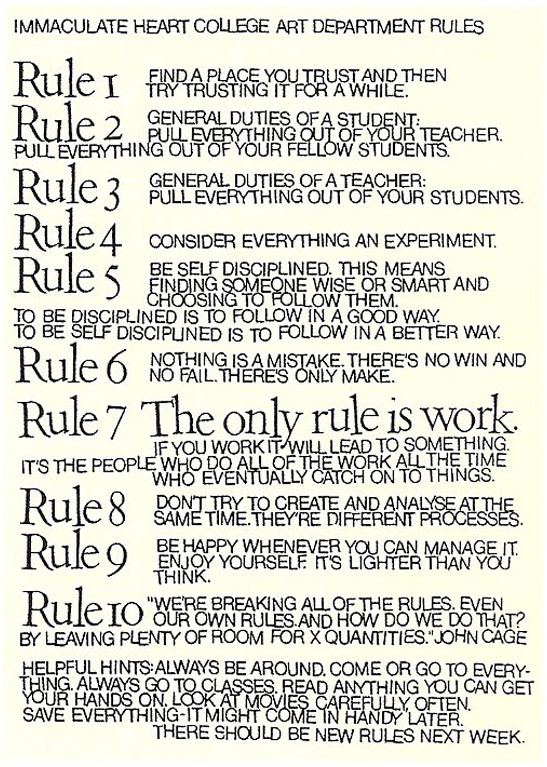
Hopfendolde-mit-hopfengarten

Like many avid gardeners, I harbor a secret belief that I can someday make money on gardening’s big brother, farming. Since The Doctor and I have somewhat recently come into some acreage in Madison County, NY, my fantasy of someday becoming a gentleman farmer, growing hops (barley’s bitter buddy in brewing beers) is starting to become even more realistic – or at least in the realm of reality.

So, in an effort to educate myself a bit on the process and atmosphere of hop farming in the Northeast, I shelled out to be a remote webinar attendee for this year’s conference of the Northeast Hop Alliance. I learned a lot, and you can look for future blog posts on this topic, and I think there’s a disruption opportunity in boutique aroma hops, but that’s for another day.

One of the speakers, Rick Pedersen of Pedersen Farms, had a lot of great, practical advice about how to plant posts and burn crowns, but his mindset, especially when advising younger farmers, struck me as equally valuable for today’s entrepreneurs, wantrepreneurs, and future founders. That advice was this:

Plan to be big enough to be relevant. 

This really resonated with me – if you’re going to build a business, whether it’s agricultural or technology or distribution, plan to be big enough that people will care. Make your plans too big to ignore. With size comes efficiency and a certain practical inability to be ignored. If you want to make a difference in your industry and in your community, don’t plan for small things. Demand this of yourself.

Documentation, Support, and Customer Success

oIpwxeeSPy1cnwYpqJ1w_Dufer-Collateral-test-1400x1136

I’ve had a bunch of conversations recently around the role of documentation in hospitality on the internet. My friend and colleague Andrew posted about documentation recently, and of course my love for Buffer requires I point out their approach to documentation – documentation is such a big deal in support communities that we even have a conference dedicated to it.

When it comes to documentation, I am of two minds. Software development, especially code languages and learning code languages, involve a lot of documentation, and a lot of referring to documentation, and so forth. We need to recognize, though, that when we use code to build really awesome things, we are building those things for an audience who is perhaps not as steeped in a documentation-heavy culture.

Working in support for WordPress.com, I am grateful every day for the documentation that we have – for little things that folks can work out for themselves if they have a guide (like, say, a custom menu or static front page), and certainly for big things that are challenging even for me (intricate Theme setups especially).

Lately, though, I have been shifting my thinking on documentation. Part of this comes from doing some deep dives in our Google Analytics account for our docs, finally getting a real bite of how huge our docs base is, and seeing for the first time how much traffic they really get (about 60,000 visitors per day). Recently I’ve started to see documentation as a psychological band-aid, and as a sidestep to improved products. Here’s what I mean:

Docs as a Psychological Band Aid
When a member of our staff recognizes that we have a flow, or a feature, or some other piece that requires additional education, and they invest their time and brainpower in creating documentation for that flow or feature, we can breathe a sigh of relief, right? Now, when a customer asks about that flow or feature, we have a resource for them. That problem is solved. Here you go – read this. We’ve scaled. We can check that box.

The problem here, is that when ever we feel like that box is checked, we calcify our thinking on that issue – we think it’s taken care of. A question about X? Here’s our documentation about X. Especially in a company where staff feels overworked and understaffed (ie, all of them), this becomes the path of least resistance, which then becomes habit. A habit of deferring replies to documentation has two unfortunate psychological consequences: first, it calcifies us in a place where critical thinking no longer takes place. More on this in the next point.

Second, it (inappropriately!) shifts the responsibility from us, as hospitality professionals, onto our customers. It is no longer our job to create an excellent environment where they can accomplish their goals – now it is the customer’s job to read the documents we created for them – time spent in documentation is time spent not accomplishing their goals.

Docs as Sidestepping Product Improvement
Every support document is an admission that a flow or feature doesn’t Just Work. When we create a long series of nested documentation on how to accomplish something is an indication that something is hard to do. A great company makes its customers feel smart, safe, and powerful. Taking someone out of your features, out of your flows, out of the path to their success, to refer to documentation represents a point of friction, an obstacle.

If you want to take the principles of Growth Engineering and apply them to doing hospitality right at your company, take a look at the top search terms in your Support page. Take a look at how people use those documents. Those are break points, those are places where a document is acting as a band aid to a better UX, or a better product (in this, we could learn a lot from modern computer and video games, but that’s a post for a different day).

So What Then?
I don’t hate documentation. I think for a lot of use cases it’s necessary, and it can be done really, really well. I do think that serving our customers to the very best of our ability, however, means reducing our documentation, approaching problems with ownership and a critical mindset – not “Well why don’t they read the guide?” but rather “Why does embedding this require a guide?”

Documentation can be a great tool in the Internet Hospitality Toolbox, but it’s only a temporary stopgap – Docs should be the clamp that holds two boards together while the glue cures, not the permanent solution.
The Only Rule is Work

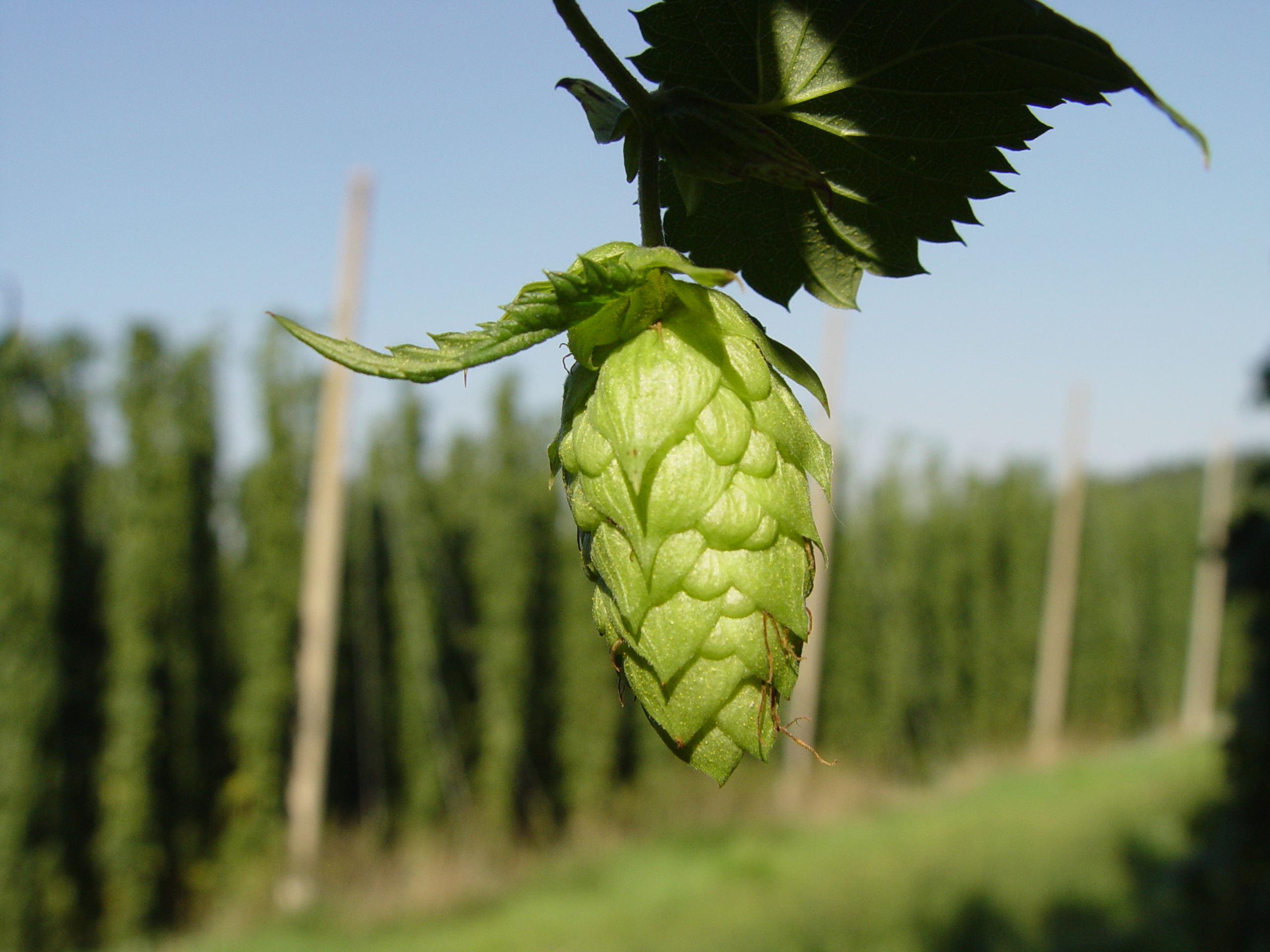
sistercoritarules1RULE ONE: Find a place you trust, and then try trusting it for awhile.

RULE TWO: General duties of a student — pull everything out of your teacher; pull everything out of your fellow students.

RULE THREE: General duties of a teacher — pull everything out of your students.

RULE FOUR: Consider everything an experiment.

RULE FIVE: Be self-disciplined — this means finding someone wise or smart and choosing to follow them. To be disciplined is to follow in a good way. To be self-disciplined is to follow in a better way.

RULE SIX: Nothing is a mistake. There’s no win and no fail, there’s only make.

RULE SEVEN: The only rule is work. If you work it will lead to something. It’s the people who do all of the work all of the time who eventually catch on to things.

RULE EIGHT: Don’t try to create and analyze at the same time. They’re different processes.

RULE NINE: Be happy whenever you can manage it. Enjoy yourself. It’s lighter than you think.

RULE TEN: “We’re breaking all the rules. Even our own rules. And how do we do that? By leaving plenty of room for X quantities.” (John Cage)

HINTS: Always be around. Come or go to everything. Always go to classes. Read anything you can get your hands on. Look at movies carefully, often. Save everything — it might come in handy later.

From the always fascinating Corita Kent.

Customer Experience Analyst

tumblr_niyki1GD161qfirfao1_1280

Check out this job posting at New Relic.

How cool is that? A data scientist, working specifically to ensure that the customer is having the best possible experience – how is that not revolutionizing hospitality? Using modern tools, bringing in knowhow from statistics, data analysis, and scripting languages to move the envelope forward on hospitality. That is inspiring.

I won’t be surprised if we see more postings like this pop up.

If, like me, you’re curious about some of these terms, here are some handy Wikipedia links:

Logistic Regression
Naïve Bayes Classifier
Support Vector Machine
Decision Trees
Artificial Neural Network
Net Promoter Score

Small Data: A Case Study

foodiesfeed.com_DSC_0001-7


Big Data is a Big Thing, an idea that often goes hand in hand with words like “Enterprise” and “scientist.” Today I’d like to share a story from my past to illustrate that data, experimentation, and testing, are entirely accessible to business owners of all flavors and sizes, not just massive corporations with a dedicated team of growth hackers, data scientists and an in-house barista.

Two jobs before Automattic, I worked for a small chain of artisan bakeries in Providence, Rhode Island, called Seven Stars. There are three locations (very small chain), and it is owned by a lovely couple who brought me on to design and execute an improved employee training system. Once that was up and running on its own steam (after about 18 months), I became a bit more of a general utility player for them – finding problems and then solving them. It took great trust on their part, but I like to think I earned that trust, in efficiency gains, improved revenues, and tastier coffee.

During a conversation with one of the owners, he mentioned that he had a real gripe with muffins – not only were they one of the more involved pastries that we sold, they also had the slimmest margins. A situation fraught with possibility. I asked him a few more questions, and headed back to my shared office to dig through some of our historical point of sale data. I didn’t know it at the time, but what I was about to embark on was the retail bakery version of growth hacking.

At the time, we offered three different muffins every day, with the selection rotating from day to day – Blueberry, Corn and Pumpkin, say, on Monday, then Chocolate, Bran and Blueberry on Tuesday, etc etc.

After establishing a baseline (easily done with today’s computerized point of sale systems), I proposed an experiment: we would produce only 2 kinds of muffins per day, and only produce the ones that had the strongest current sales. We’d do this for six weeks, then take a look at the data, and decide from there – or, as I’d say today, we would then iterate on the process.

And, thankfully, since this is a case study, it worked! After six weeks, the sales at of each store had retained its pre-experiment growth percentage. Now, this may not sound like a success – sales growth had not changed? How can an experiment be a success if sales growth had not improved?

Sales growth may not have changed (up or down), but the numbers behind the sales growth had shifted; muffins fell significantly, but other areas (specifically scones, which interestingly sat next to the muffins in the display) grew to match the decrease in muffin sales.

If I were to guess, I would suggest that this indicated that folks who were at one time buying a muffin (perhaps the third, dropped, variety), were not simply abandoning their purchase, but rather purchasing another item, possibly even at the same price point. However, since muffins were the worst-producing item, revenue-wise, anything else represented a greater revenue for the bakery. Additionally, moving bakery labor from muffins to another product represented a second win, since muffins were the most laborious and frustrating product.

I like to think of this kind of data implementation as Small Data – using the information that you have to run experiments that are within your grasp for small, consistent wins. You don’t need a data scientist on staff, you don’t need a degree in statistics, you just need to know your business and have a curious mind. Data can work for everyone – all you need is a willingness to experiment.