Category: Remote

Feasting and Flexible Work

Feasting and Flexible Work

Something you all may or may not know about me is that I am a big fan of Mexican food. Well, I say that but I suspect what I’m really a fan of is American Mexican food, which is probably a different thing.

Growing up we had your standard Family Taco Night fairly regularly – hard shelled tacos, ground beef, the quintessential starter taco.

I’m not ashamed to admit that Taco Bell introduced me to soft tacos. I had to learn about them somewhere, and I think at the end of the day Taco Bell as a gateway drug into new taco horizons is an acceptable origin story.

Continue reading “Feasting and Flexible Work”

Communicating in 2016: Leave Good Messages

Communicating in 2016: Leave Good Messages

Subtitled; Never Just Say ‘Ping’

I was chatting with my friend Dan today, who works for one of the biggest publishing houses in the world. I’ve known Dan for a really long time. Here’s a picture of us from almost ten years ago:

r6qwido4tw-3000x3000

Dan was telling me that his subsection of the company was starting to use Slack for communication at work. You know Slack right? We’ve been using Slack for a while at Automattic (for a time, the open source WordPress project was the biggest single group using Slack – or so I heard. Couldn’t tell you if that’s still true!).

Continue reading “Communicating in 2016: Leave Good Messages”

Work from Home but Still Eat with Friends

Working remotely has tons of advantages, and it’s one of the best features of being a Happiness Engineer at Automattic.

(In fairness, all positions at Automattic are fully remote!)

I’ve worked remotely for over two years, and I’ve learned a few tricks, a few tactics to do battle with the parts of working from home that can be challenging.

Continue reading “Work from Home but Still Eat with Friends”

Work Remotely: Shrink Your Office

Work Remotely: Shrink Your Office

I love working remotely. Working for Automattic is especially solid, since our entire company is distributed. There is no office anywhere, although we do have a building in San Francisco for events and visiting Automatticians.

Scott recently tweeted about one of the advantages that working remotely offers:

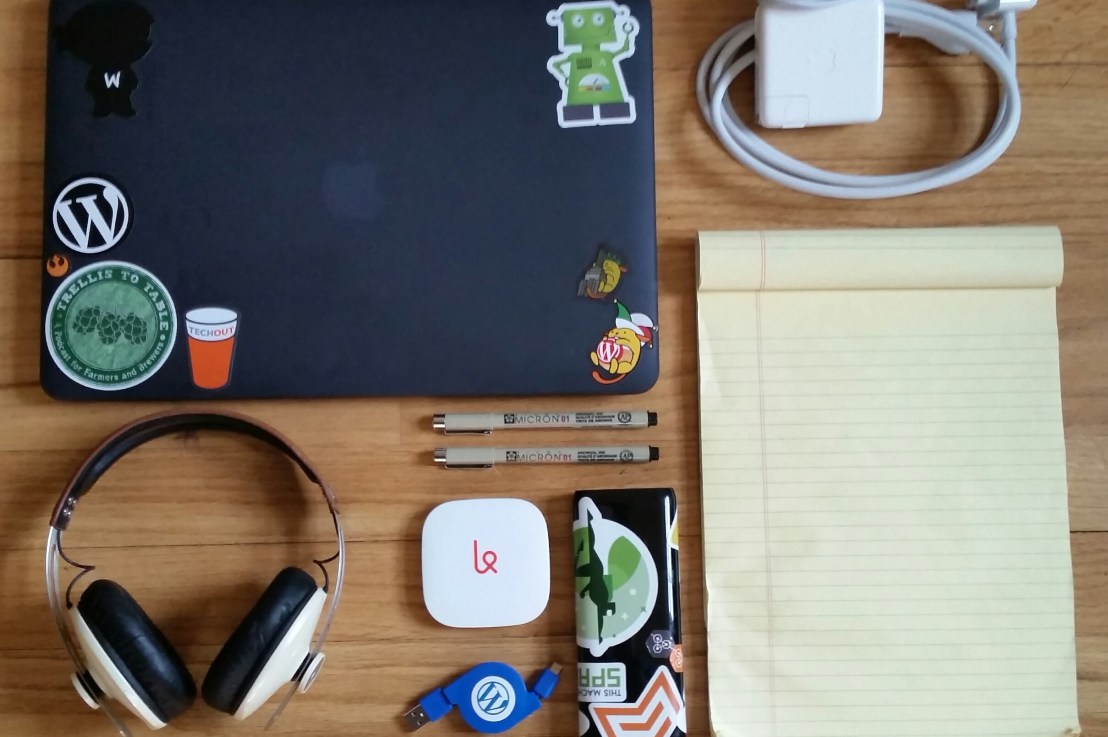
He’s absolutely right. Over the last two years I’ve shrunk my required inventory to be productive down to a pretty tiny footprint. Check it out:

Continue reading “Work Remotely: Shrink Your Office”

Remote Leadership: Figuring Out Feedback

Remote Leadership: Figuring Out Feedback

Working in a fully remote environment creates some unique challenges. One piece, that I’ve written about before, is the need to intentionally make visible one’s work.

This intentionality comes from the nature of the remote environment: we don’t have the natural day-to-day contact, the sort of diffusion of knowledge that one can gain from being in the same physical space.

Similarly, the need for feedback, for eyes on your work and your working style, is a very real need, and one that can be hard to figure out in a fully remote enviroment. I’m outlining here the way my team and I currently approach it – this approach has developed somewhat organically, out of company-wide surveys and smaller team discussions, and it’s working pretty well as far as I can tell. Like anything and everything we do, when it stops working, or when a better way to do it comes around, we’ll change!

Our current feedback structure has three types of feedback, each of which is quarterly, on a rolling basis. This means we end up engaging in one type of feedback every month. The three types:

  • Peer Reviews – where each member of the team reviews one random other member (including me!) on ticket and live chat transcripts.
  • 3-2-1-Oh Roadmapping – where I meet with each member of the team, and we chat about what they’re good at, what they’d like to be good at, and how I can support their journey.
  • Leadback Surveys – where the team anonymously provides me feedback on how I’m doing as their team lead. Yes, there are Likert scales involved!

In this way we’re able to provide feedback to one another, I’m able to understand how folks are feeling and how they see their personal professional journey, and my team is able to help me understand how best to serve them.