Author: Simon

Five in Five: Looking to the Future

I live in a neat little neighborhood just outside of the city center of my town – it’s not a development, but a little residential pocket with a half-dozen streets, maybe 80 homes?

It’s one of those neighborhoods whose first or second round of homeowners are starting to get a little older, move into apartments or somewhere where it doesn’t get so darn cold in the winter time. As they sell their homes, first time homebuyers and small families are moving in – it’s a neighborhood in transition, and it means that my kiddos, when they’re a little older, will have lots of kids around their age in the neighborhood. It’s a good thing. It’s a nice place to live.

One joke I have with my wife, about our neighborhood, is this: there’s a street hockey goal that’s always in the street where we turn toward home. We’ve never seen anyone actually using it, but it’s always there, rain or shine, spring, summer, fall. We had both noticed it, independently, and once, driving together, I said;

“I figured it out, by the way. It’s not for street hockey – it’s a reminder.”

She looked at me, and nodded.

“It’s a reminder, so when we drive in, when we get home, we say to ourselves, ‘Don’t forget to have a goal.’ ”

We had a chuckle – I’m still working on my Dad Jokes, obviously. But, still, it was the sort of little thing that has stuck with me, and every time I pull into our neighborhood, I see the street hockey goal, and I say to myself, ‘You’ve got to have a goal.’

Especially when you’re working in a job you enjoy, with people you respect, it’s easy to get caught up in the day-to-day ebb and flow of The Work. It’s a small thing to do your work and go to meetings and let the tide carry you in and out of your daily labor. I have been in that type of aimless, do-good-work-and-go-home mindset for some time.

There’s no shame in it: to be ambitious without a clear destination, though, is a recipe for frustration and for burnout. So – I joined a Mastermind group. I got more involved in the broader support / success community. I’ve given it some thought – my need for a goal, I mean – and I’ve decided on this:

I’m going to be in the top five Customer Success professionals working in the SaaS space within the next five years

Or, ‘Five in five.’ Even shorter: 5in5.

Here’s why Customer Success is the right fit for me:

I’m an analyst; I know how to find patterns in behavior, I know how to use the tools of Big Data to identify the best course of action that will reveal real insights. I understand the import of Small Data; I’ve surveyed and interviewed customers across multiple product lines, using a diversity of approaches. I know how to turn all of that research into action and communicate that action clearly – even to busy folks who aren’t interested in statistical significance. 

I’m customer focused; I’ve built my career on finding ways to make the millions of publishers, bloggers, artists and business owners find success at WordPress.com. I understand how customers can provide us information even when we aren’t asking for it. I am keenly aware that while reducing the time it takes for customers to get a reply is important, it’s not as important as reducing and preventing the pain that causes your customers to reach out in the first place.

I am dedicated to leading; I know that I am better for the folks I work with. I know that a diverse collection of perspectives and approaches will always be greater than the sum of its parts. I’ve found great satisfaction and endless opportunities for humility in leading teams, especially remote teams. I’ve written about that an awful lot.

Customer Success is in its infancy; the combination of skills that I have, this weird intersection of analysis, customer experience, and team leadership – it’s not clear how I can leverage this into impact, into creating the most value in the universe. In this way, the fact that the work of Customer Success is still so flexible, without the more rigid history and expectations of something like Customer Support (‘Reduce response times’), it allows me to not only pursue impact – but to create the role, shape what it means to be successful.

The next piece of the puzzle; how do I get there?

Stay tuned!


Bringing Home the Bacon: IBM World of Watson

If you’ve been following me on Twitter, you may have noticed a little shout out from me mid-August:

Pretty cool, right? You’re forgiven for not 100% understanding what this means – if I’m being honest I don’t 100% understand it myself.

I’ve been invited and now am a participant in a private Slack instance, for the folks in the Predictioneer program and folks at IBM. I have access to the full featured professional level of their Watson Analytics toolbox (more Posts about this soon – it’s a really interesting piece of work, and is something I’m still learning about in big ways).

Most interestingly, I’m also headed to IBM’s World of Watson event later this month in Las Vegas – check this thing out, y’all. A 20,000 person conference. What?!

There is going to be an awful lot happening at this event – there are almost 1,500 different sessions, speakers, and workshops to attend. For the record, take a look at this speaker page. Kindly do note that there is a Philosophy Professor in the mix!

We can find some more context around what will actually be happening in Vegas in this letter that IBM provides to convince your boss to send you to this conference (really!):

IBM World of Watson in Las Vegas, October 24-27, 2016, formerly IBM Insight, is a great opportunity for me to engage with thought leaders and experts.

I’ve reviewed the details for this event and believe that the knowledge and connections I would gain would be highly beneficial to our organization.

This event delivers unmatched value for all things data, analytics, cloud and more. During the conference, I will be able to:

• Learn how cognitive businesses are using data science, advanced analytics and Watson to extract new insights, enhance their expertise, and exceed all expectations.

• Gain best practices and knowledge directly from IBM experts, in addition to exploring key topics like data science, advanced analytics and cognitive computing, through elective courses and innovation talks

• Preview product roadmaps and key trends and learn how they apply to our industry

• Get hands-on experience at more than 200 labs, certifications and training valued at $8,000

• Meet with experts and more than 500 IBM client speakers who are working with data and analytics in ways that could benefit us

• Choose from more than 1,500 targeted business and technical educational sessions

• Participate in hours of networking with peers from other companies facing similar challenges, all while learning tips and best practices that I can bring back to implement within our organization

I will also get the chance to explore the newest products, services, and solutions offered by IBM and 120 IBM Business Partners. This is an exceptional opportunity to experience game-changing innovations that are fueling digital transformation across our industry.

The conference will help me enhance my skills while strengthening contacts in the industry. Not to mention the fact that I’ll get critical hands-on experience with the latest cognitive solutions capable of propelling our company into the future. I will share what I learn with other members of our team so we will all benefit from this event.

I’ve started to put together my personal agenda for my time there – there is no shortage of sessions on customer behavior, collecting customer data, and finding ways to leverage that into doing business better – but after a conversation with my Mastermind group, I wanted to reach out to you all, folks who are aware of my approach and my thinking, and see what you would want to see me bring home from this event.

After all, I think it’s fairly plain what IBM hopes to see from me – social engagement at the event, blogging, and bringing the Whippersnapper Startup Mindset to the table.

I know what I’m hoping to find at the event – lessons from Big Businesses that I can bring home to Automattic. Working in tech today does mean some amount of hubris, some amount of echo-chamber, small-tribe thinking – but the fact is, these big businesses are big for good reasons. I’m hoping to find the Venn diagram piece that fits my work today, and get ahead of the curve for tomorrow.

What I don’t know is what you all might like to see – I’d like to write quite a lot during and following this event, and having a better idea what you, the folks reading my blog, are interested in, means I can bring the best stuff here.

What interests you when it comes to the intersection of Data and Support / Success? What do you think we could be doing better? What part of AI do you think will be impactful for our work? Should I focus on bots? On the Internet of Things? Maybe something else altogether!

Please let me know in the comments! I’ll also be seeking the same feedback on Twitter, so if that’s your preference, definitely reach out!


Paternity Leave and Reading

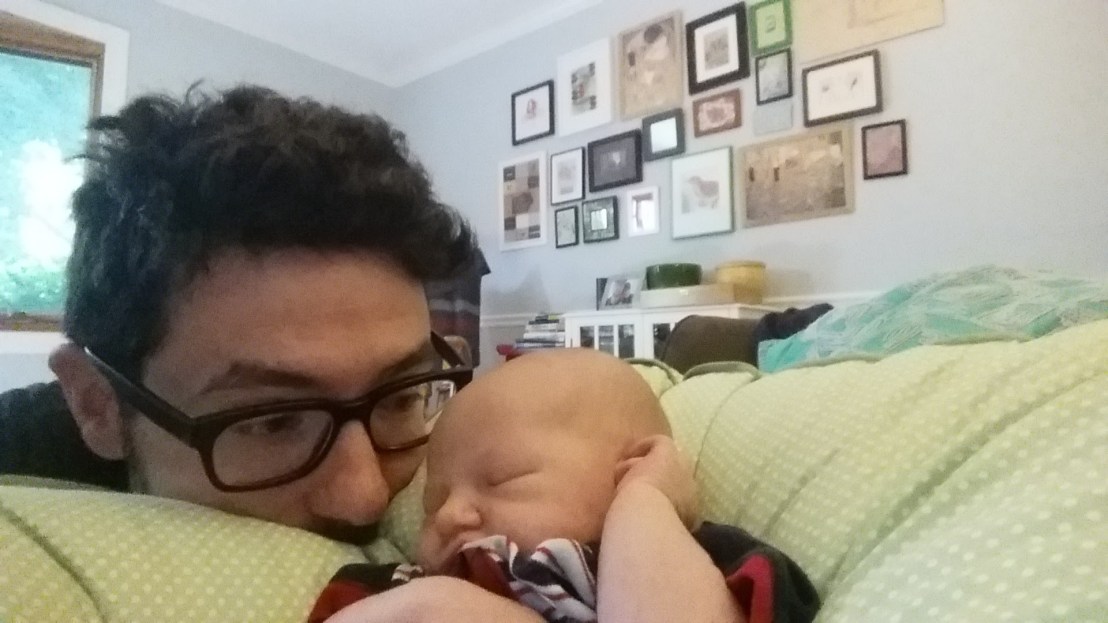
As you may have noticed via my recent mini tweetstorm, I’m on paternity leave, and feeling thoughtful about it.

(Sidebar, is there an agreed upon definition of tweetstorm? We can all agree that 25 tweets a tweetstorm make, but what about 9? 3?)

Especially having spoken with many of my friends, who work locally, who have nothing like this type of paternity leave – it really is a landscape of gratitude, on my end. This time is special, and important, and I’m so grateful and (frankly) lucky to have it.

When our daughter was born, I didn’t take the three months – I took it in fits and spurts here and there, since the policy is three paid months within the first year of a child’s life.

Rather than take three months at the outset, I took two weeks when she was born, then some time over the holidays, Spring Break to coincide with my wife’s time off, etc. I didn’t end up using the whole three months, and the time I did take off, I could have just as easily taken off with our open vacation policy rather than the “saved pat days.”

With our second child, I was reflective on our daughter Mango’s birth and my reaction, work-wise. Why didn’t I take the time I was afforded?

It was out of fear. Even a few weeks off at a place as fast paced as Automattic meant having to recalibrate, scramble to catch up, and try to figure out how to navigate what seemed like an all-new sea. I was worried that extended leave would jeopardize my chances for advancement and recognition.

Which brings us here – though I’m a Team Lead, responsible for the careers and success of  eleven of my peers, I have chosen to take my full three months of paternity leave. Before he was born, I spent a great deal of time working with my stand-in lead, training and shadowing one on ones and (I’m not proud) linking her to lots of posts on this very blog.

She’s going to do great. I also think that, on a bigger level, it’s important  for the folks on my team to see me take this time – that even in a leadership role it’s safe, and encouraged, to take the time we’re given. Having this time with my kiddos and my wife is important, for me personally but also for me as a long-term contributor to Automattic’s success.

(Our CEO Matt Mullenweg talks a little about hiring folks using a 30-year mindset in the latest Tim Ferris podcast – knowing he sees his employees this way makes me more comfortable taking this kind of time off)

Since I am a terrible A-type monster, three months away from work is a horrifying prospect. I am bad at leisure – especially superfluous leisure.

So, I’m reading. I’m reading a lot. I asked some folks I respect for their recommendations, as well as the world wide Twitterverse. Here’s what I have ahead of me:

Orginals, by Adam Grant, recommended by @mremy
Thinking Fast and Slow, by Daniel Kahneman, recommended independently by @andrewspittle and @ctdotlive
Anarchist’s Tool Chest, by Chris Schwarz, recommended by @blowery
Laws of Simplicity, by John Maeda, recommended by @photomatt
Name of the Wind, by Patrick Rothfuss, recommended by Bill Bounds
The Obstacle is the Way, by Ryan Holliday, recommended by @mikeykrapf
The Score Takes Care of Itself, by Bill Walsh, recommended by @JeremeyD
Deep Work, by Cal Newport, recommended by @thebriankerr

I’ve already finished a few – with 59 days left in my pat leave I’m looking at about 24.3 pages per day to finish them all in time. Which means, of course, I could probably sneak in one more book if you have an excellent recommendation!

Nozick on Philosophy

I referenced this in an earlier post (here!), and it’s too good not too give it its own space. This is from the Preface of Robert Nozick’s Anarchy, State and Utopia. He’s describing how professional philosophers assemble theories and arguments for publication.

(you can get your own copy for one dollar and nine cents right now)

“One form of philosophical activity feels like pushing and shoving things to fit into some fixed perimeter of specified shape. All those things are lying out there, and they must be fit in. You push and shove the material into the rigid area getting it into the boundary on one side, and it bulges out on another.

You run around and press in on the protruding bulge, producing yet another in another place. So you push and shove and clip off corners from the things so they’ll fit and you press in until finally almost everything sits unstably more or less in there; what doesn’t gets heaved far away so that it won’t be noticed.

(Of course, it’s not all that crude. There’s also the coaxing and cajoling. And the body English.)

Quickly you find an angle from which it looks like an exact fit and take a snapshot; at a fast shutter speed before something else bulges out too noticeably. Then, back to the darkroom to touch up the rents, rips and tears in the fabric of the perimeter. All that remains is to publish the photograph as a representation of exactly how things are, and to note how nothing fits properly into any other shape.”

This strikes me as resonant; not just for philosophers or even just academics, but for many of us (myself included!) – at work, at home.